


The Janka Hardness Scale Made Simple
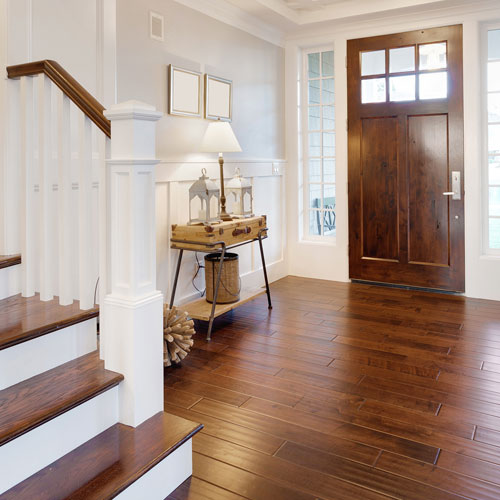
When you fall in love with a hardwood floor, the first thing you notice is usually the color or the grain. The question that really matters for everyday life, though, is how well that floor will hold up to it. Kids, pets, furniture, and the occasional dropped pan all leave their mark, and some woods shrug those things off far more easily than others.
That is where a simple number can save you a lot of guesswork. The Janka hardness scale measures how much force it takes to press a small steel ball halfway into a piece of wood, and the result tells you how resistant that species is to dents and wear. Understanding that one figure makes choosing hardwood flooring feel a lot less like a gamble and a lot more like a confident decision.
How The Janka Hardness Scale Works In Plain English
The test itself is wonderfully straightforward. A steel ball just over four-tenths of an inch wide is pressed into a wood sample until it sinks halfway in, and the pounds of force required becomes that wood’s Janka rating. A higher number means a harder, more dent-resistant surface, while a lower number points to a softer wood that marks more easily.
What makes the scale so useful is that it lets you compare very different species on equal footing. You can look at two beautiful planks that seem similar in the showroom and know instantly which one will better survive a busy hallway. The numbers turn personal taste into practical knowledge.
Reading The Numbers Without The Headache
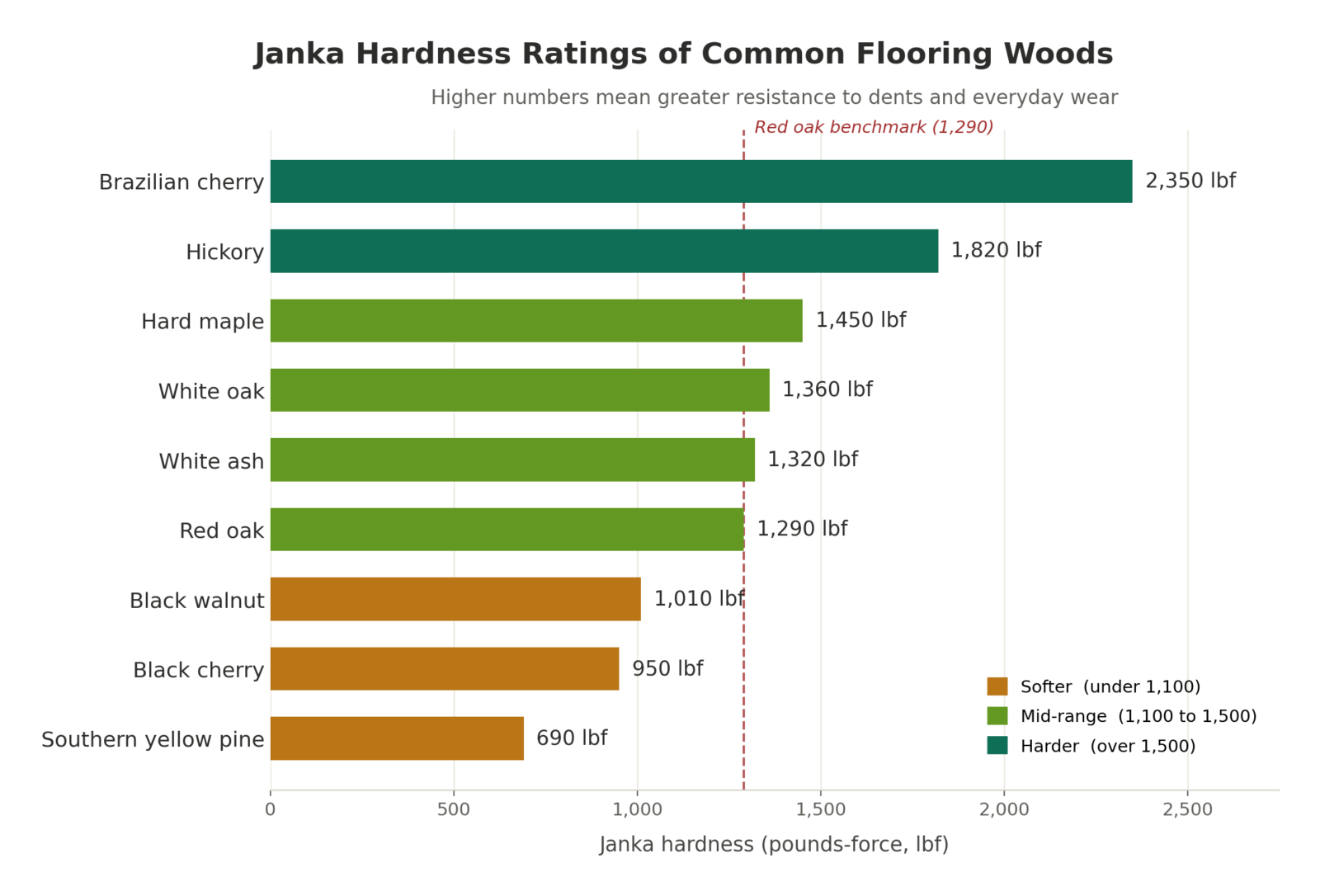 You do not need to memorize a chart to put the scale to work. A handful of familiar reference points is usually enough. Domestic red oak sits right around 1,290, and because it is so common, many people treat it as the unofficial middle of the road.
Anything noticeably below that figure tends to feel softer underfoot and show wear sooner, while species rated well above it lean toward the rugged end. Our own hardwood basics guide lists hardness ratings for a range of species, from gentle pines near 660 all the way up to dense exotics, so you can see exactly where a favorite wood lands.
Matching Hardness To The Way You Live
A high Janka rating is not automatically the right answer for everyone. The goal is to match the wood to the room and the rhythm of your household. A quiet bedroom can happily wear a softer species like walnut or cherry, where the gentle character of the wood becomes part of its charm.
Busy zones tell a different story. Entryways, kitchens, and homes with large dogs or active children benefit from harder species such as hickory, hard maple, or oak. Thinking about traffic first, then beauty, keeps you from falling for a floor that looks perfect on day one but frustrates you a year later.
Why Hardness Is Only Part Of The Picture
As helpful as the scale is, it measures one specific quality and nothing more. A very hard wood can still scratch, fade in strong sunlight, or react to changes in humidity, so finish and installation matter just as much as raw density. Two floors with identical Janka numbers can perform very differently depending on how they are built and cared for.
This is why a thoughtful hardwood care and maintenance routine protects your investment no matter which species you choose. Felt pads, prompt cleanup of spills, and the right cleaning products keep even a moderately rated floor looking wonderful for decades. Hardness gives you a strong starting point, and good habits carry it the rest of the way.
Find The Floor That Fits Your Home And Your Life
We at Macco’s Floor Covering Center love helping homeowners turn a single number into a confident choice, and our flooring experts can walk you through species, finishes, and our interior design services in person. Stop by any of our Wisconsin showrooms, including Green Bay, Appleton, Sheboygan, and beyond, and we will help you find a hardwood floor built for the way you really live. We would love to see you soon.