


Beyond the Standard Grid: Creative Tile Layout Patterns (Herringbone, Chevron, and More)
When you walk into a thoughtfully designed room, the tile pattern often captures your attention before you even register the color or glaze. While a traditional square grid has its place, arranging tiles in creative patterns instantly elevates your interior design. Choosing an imaginative layout turns everyday porcelain, ceramic, or natural stone into a custom architectural feature.
Whether you are updating a busy mudroom, remodeling a master bathroom, or designing a cozy fireplace surround, exploring patterns beyond the standard grid allows you to express your individual style while adding lasting value to your home.
At Macco's Floor Covering Center, serving Green Bay & Northeast Wisconsin and communities across Wisconsin, our team knows that flooring must balance head-turning beauty with everyday practicality. Between slushy winter boots, muddy spring paws, and sandy summer toes, your floors work hard all year long. By combining durable tile materials with artful layout patterns, you can create living spaces that feel tailored, expansive, and resilient.
Transforming Your Space with Intentional Tile Geometry
Tile layout is not just a decorative choice; it is a powerful architectural tool that alters how you perceive the size, height, and flow of any room. When you lay tiles in long diagonal lines, you encourage the eye to travel outward, making compact entryways and narrow hallways feel noticeably wider. Conversely, orienting rectangular tiles vertically draws the eye upward toward the ceiling, creating an airy, open atmosphere in spaces with standard eight-foot ceiling heights.
Living in Wisconsin means your flooring choices must also accommodate distinct seasonal shifts. Tile offers an impenetrable barrier against melting snow, road salt, and lake moisture, but your installation pattern dictates how seamlessly that floor integrates into your home. When you work with our experienced design team, we help you select layout geometries that complement your architecture, from classic mid-century ranches in Schofield to historic Victorian residences in Janesville.
Beyond visual dimensions, pattern selection impacts room traffic and focal points. An intricate layout can define an “area rug” effect within an open-concept great room, delineate a walk-in shower from the main bathroom floor, or guide visitors naturally down a main hallway. By giving deliberate thought to how tile lines guide the eye, you turn ordinary square footage into an engaging visual journey.
Dynamic Angles: Herringbone and Chevron
Angled tile installations inject energy and movement into areas that might otherwise feel flat or predictable. Two of the most sought-after geometric layouts are herringbone and chevron, each delivering a distinctive visual texture and refined character.
The Enduring Appeal of Herringbone
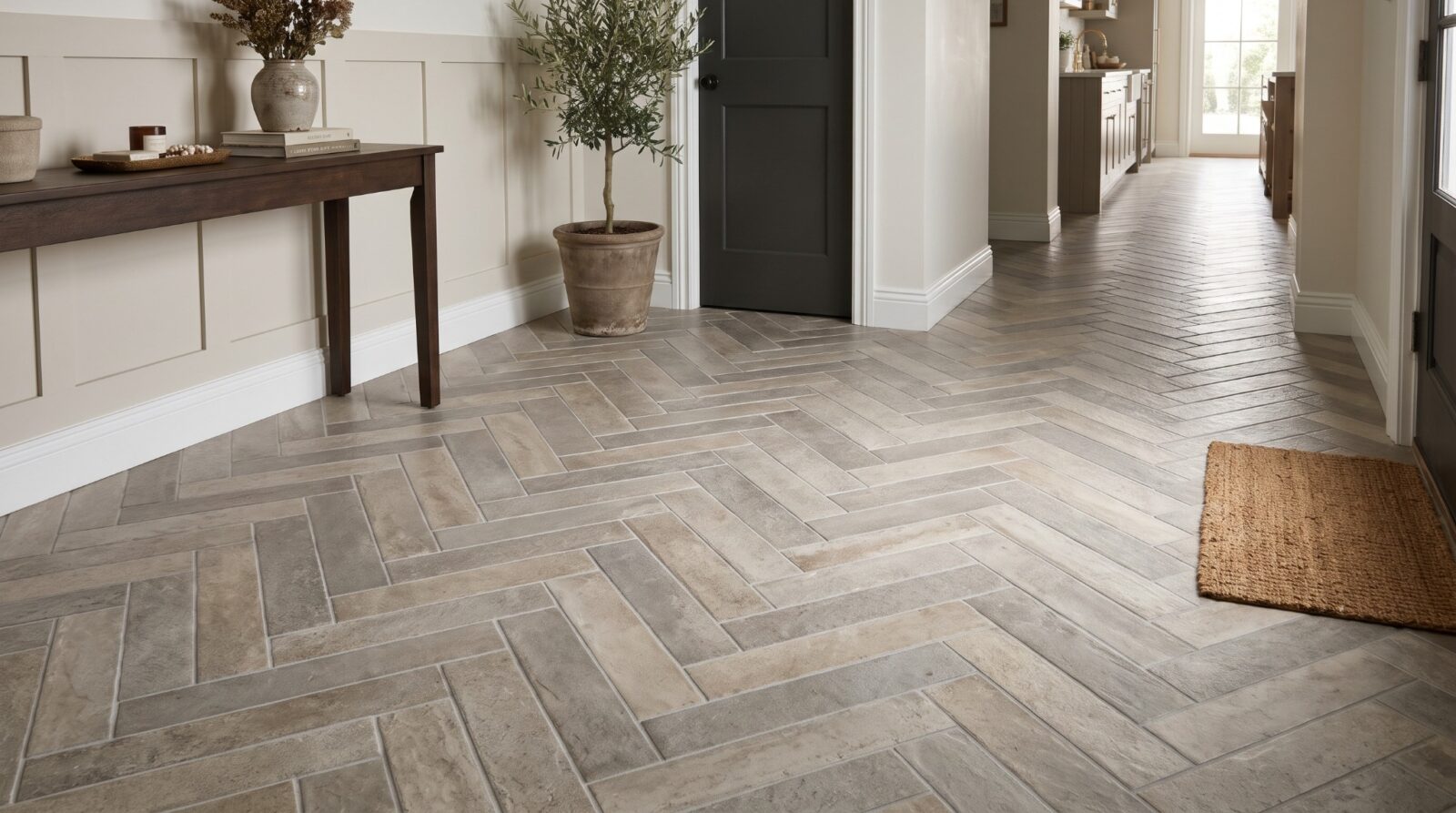
Herringbone is crafted by placing rectangular tiles at precise 90-degree angles to one another, forming an interlocking, staggered zigzag. This pattern traces its roots back to ancient Roman roadways and classic European parquet floors. Because the pattern creates continuous multidirectional movement, it draws attention without overwhelming adjacent cabinetry or wall colors.
You will find that herringbone works beautifully across a wide range of residential applications:
- High-Traffic Foyers: In communities like Green Bay, where winter boots carry snow and grit indoors, a porcelain herringbone floor in your entryway hides daily wear while providing a grand first impression.
- Fireplace Surrounds: Running slender tiles in a herringbone pattern from the hearth up to the mantle creates a warm, sophisticated focal point in your living room.
- Kitchen Backsplashes: Using crisp subway tiles in a vertical herringbone configuration adds contemporary flair to traditional shaker cabinets.
- Shower Accent Walls: Installing a contrasting herringbone panel inside a shower niche or across a primary wall introduces texture without requiring multiple tile colors.
When planning a herringbone layout, you can choose subtle tone-on-tone grout to emphasize texture, or select contrasting grout to accentuate every crisp geometric line.
The Crisp Precision of Chevron
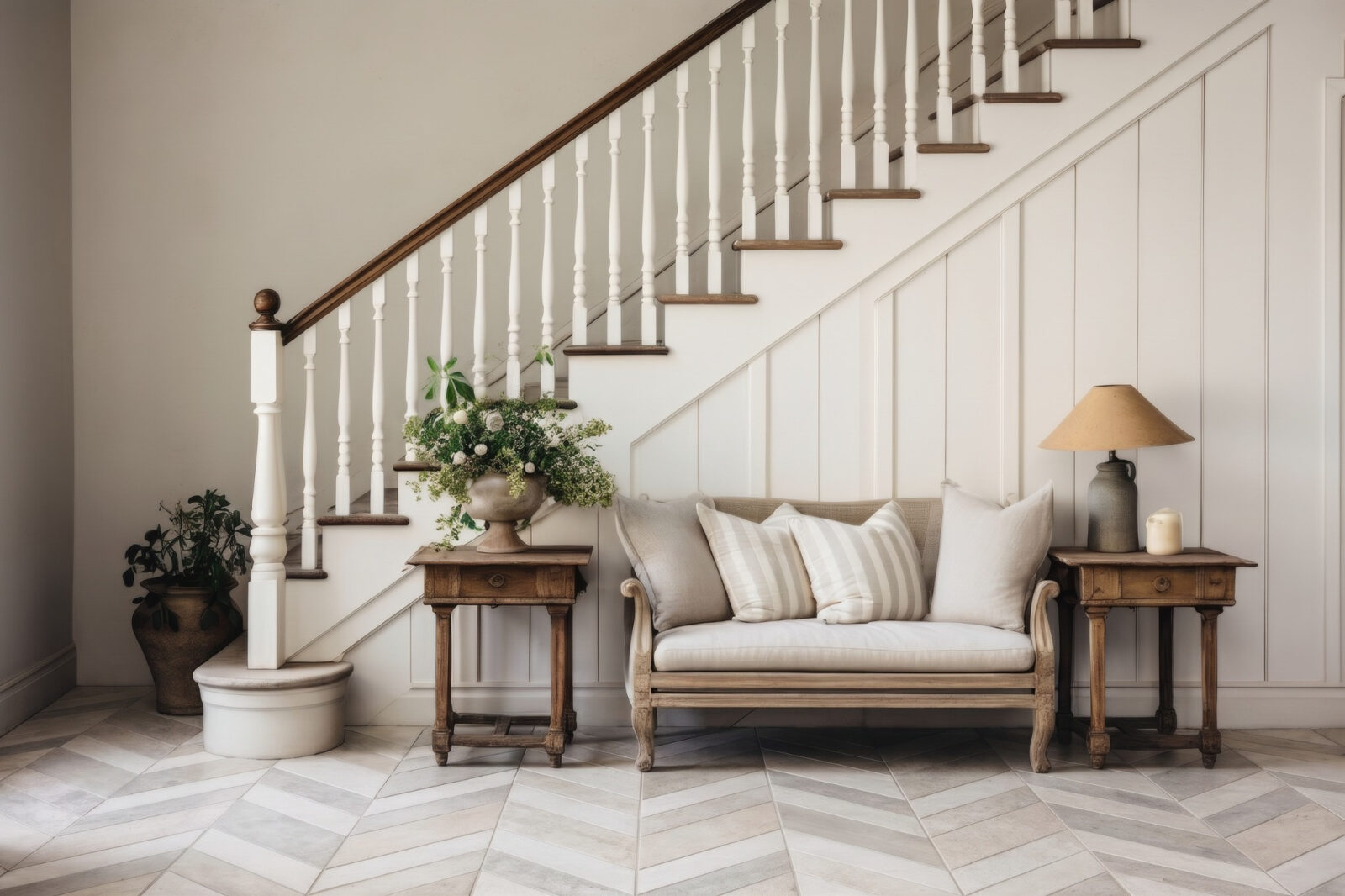
While chevron is often confused with herringbone, its geometry is entirely distinct. Rather than overlapping rectangular ends at 90 degrees, chevron tiles are cut at opposing 45-degree angles so that their ends align seamlessly, creating a sharp, continuous V-shaped point.
This clean seam produces an uninterrupted arrow effect that directs movement through a room. If you want to visually lengthen a galley kitchen or add boutique elegance to a primary bath in Sheboygan or Marinette, chevron delivers a modern, high-fashion aesthetic. Because chevron requires specialized mitered tiles or custom cuts, our professional installers ensure that every angle meets with surgical accuracy. We recommend ordering a slightly higher material overage factor of roughly 15 to 20 percent to account for these precise perimeter cuts.
Modernizing the Classic Brick Look: Offset Patterns
The traditional running bond, also known as the standard brick or subway pattern, features tiles offset by 50 percent. While this remains a dependable choice, subtle modifications to the offset ratio or installation direction can modernize your room.
The Structural Wisdom of the 1/3 Offset
When you choose modern large-format tiles, such as 12×24-inch porcelain slabs, a standard 50 percent brick joint can sometimes reveal slight natural curvature inherent to the tile firing process. This can result in lippage, where the center of one tile sits slightly higher than the edge of the adjacent tile.
By shifting to a 1/3 offset pattern, where each tile overlaps the next by one-third of its length rather than half, you solve both aesthetic and structural needs:
- Lippage Prevention: The highest point of curvature is placed against a lower stress point of the adjacent tile, ensuring a smoother, flatter floor plane underfoot that complies with standard industry guidelines.
- Subtle Asymmetry: The stepped rhythm creates a softer, more fluid visual cadence across open-concept dining rooms and kitchens.
- Contemporary Feel: The asymmetrical stagger feels relaxed and tailored, moving away from rigid commercial brick looks.
Vertical Stacks and Vertical Running Bonds
If you want to make your ceilings appear taller, orienting your tiles vertically works wonders. A vertical stack places rectangular tiles directly above one another in clean, unbroken vertical columns, delivering a sleek, mid-century modern aesthetic that appeals to minimalists.
Alternatively, a vertical running bond staggers the tiles vertically, combining modern height with the familiar comfort of brickwork. This approach is an exceptional choice for shower walls and powder rooms in classic 1960s Wisconsin ranch homes, where bathroom ceilings often benefit from a perceived boost in vertical volume. Pairing vertical tiles with matte black or brushed brass plumbing fixtures creates an effortlessly elevated, spa-like environment.
Heritage and Period Character: Basketweave and Hexagons
If you love vintage elegance, geometric patterns inspired by the early twentieth century bring timeless craftsmanship to modern living spaces.
Vintage Charm with Basketweave
Basketweave tile layouts mimic the over-under texture of woven reed baskets, typically utilizing small rectangular tiles framed around contrasting square accent pieces. Popularized in the Art Deco and Craftsman eras, basketweave is a favorite for preserving architectural heritage in historic Appleton homes and historic neighborhoods across Janesville.
Because basketweave incorporates numerous grout joints, it provides built-in slip resistance, making it an ideal choice for walk-in shower floors, powder rooms, and laundry rooms. You can choose classic white marble tiles with black marble dots for a historic monochrome look, or explore warm limestone combinations for an earthy, traditional feel.
Honeycomb Hexagons and Dynamic Transitions
Hexagonal tiles bring nature-inspired geometry into your home. Available in formats ranging from delicate one-inch mosaics to bold eight-inch porcelain pavers, hexagons offer a playful yet structured aesthetic:
- Slip-Resistant Bathrooms: Small hex mosaics wrap easily around shower pans, providing comfortable traction under wet feet.
- Statement Powder Rooms: Large-scale hex tiles in moody charcoal, forest green, or terracotta create an upscale, boutique hotel vibe.
- Feathered Transitions: Rather than ending your tile floor at a straight metal threshold transition, you can interlock hexagonal tiles directly into engineered hardwood or luxury vinyl planks. This organic, feathered boundary creates an artistic visual statement between a slush-catching mudroom and an open kitchen.
Multi-Size Architectural Layouts: Versailles and Hopscotch
If you prefer the rustic charm of European villas or Northwoods lodges, multi-size tile patterns break away from repetition altogether.
The Old-World Grandeur of the Versailles Pattern
The Versailles layout, sometimes referred to as the French pattern, uses four distinct modular tile sizes arranged in an interlocking, seemingly random puzzle. By combining large squares, small squares, and two rectangular dimensions, this pattern eliminates long, straight grout lines.
The result is a relaxed, organic surface that feels centuries old. It is an exceptional match for spacious sunrooms, patio-adjacent mudrooms, and lakeside retreats in Sturgeon Bay and Door County, where natural stone visuals harmonize with the outdoor landscape. When finished with chiseled edges and an earthy stone color palette, the Versailles layout hides everyday dust and outdoor debris with unmatched ease.
Pinwheel and Hopscotch Geometry
The pinwheel layout, also called the hopscotch pattern, uses a small square tile bordered on four sides by larger square or rectangular tiles. It delivers structured geometric balance without feeling rigid. If you want to introduce a subtle two-tone design, choosing a darker accent tile for the center pinwheel anchors the room while highlighting your primary tile selection.
Technical Precision for Wisconsin Climates: Subfloors, Grout, and Heat
A creative tile pattern requires meticulous planning, precise layout dry-runs, and proper underlayment. In Wisconsin, dramatic humidity swings between summer and winter cause wood subfloors to expand and contract. Without proper preparation, that structural movement can transfer directly to your tile, leading to cracked grout lines or fractured tiles.
At Macco's Floor Covering Center, our certified installation specialists use advanced uncoupling membranes and moisture-resistant underlayments to isolate your tile from subfloor movement. We also guide you through performance-enhancing additions:
- Radiant In-Floor Heating: Pairing an intricate tile pattern with an electric in-floor heating underlayment ensures your feet stay toasty warm during sub-zero January mornings.
- Stain-Resistant Performance Grouts: High-performance epoxy or pre-mixed grouts resist discoloration from road salt, winter slush, and everyday kitchen spills, keeping your pattern crisp and clean for decades.
- Subfloor Leveling: Large-format tiles and complex angled patterns demand a perfectly flat substrate, which our installation teams achieve through precision self-leveling underlayments before the first tile is set.
Ready to transform your home with stunning tile patterns built for real Wisconsin living? Stop by your nearest Macco's Floor Covering Center showroom, consult with our in-house interior design team, or reach out to schedule your free in-home estimate across our seven convenient locations in Green Bay, Appleton, Sheboygan, Marinette, Schofield, Sturgeon Bay, and Janesville, WI.