


What’s The Difference Between Commercial-Grade And Residential Carpet?
Selecting the right soft-surface flooring can redefine the look, comfort, and daily functionality of an entire property. While carpet adds warmth and acoustic insulation underfoot, manufacturers engineer fibers and backing systems in noticeably distinct ways depending on the target environment. Deciding between a commercial-grade style and a plush home style comes down to balancing high-impact structural resilience with luxurious everyday comfort.
Understanding pile construction, face weight, backing technology, and maintenance routines helps clarify which flooring material aligns best with your space. Whether you are remodeling a bustling office suite in Green Bay & Northeast Wisconsin or refreshing a peaceful family living room, Macco's Floor Covering Center provides honest guidance and dependable craftsmanship so every room performs as intended.
At a Glance: Commercial vs. Residential Carpet
- Pile Construction and Density: Commercial carpets rely on short, tight loops to endure continuous shoe traffic, whereas residential styles prioritize taller, open cut piles for barefoot relaxation.
- Underlayment and Padding: Residential carpets depend on thick foam cushions to absorb steps, while commercial carpets require minimal, ultra-dense padding or direct adhesive bonding to prevent shifting under heavy rolling items.
- Fiber Performance: Commercial fibers favor solution-dyed synthetics built to resist heavy staining and harsh cleaning agents, while residential fibers focus on stain protection combined with a gentle, plush touch.
- Lifespan and Environment: Commercial installations target 10 to 15 years of heavy public foot traffic, while residential options focus on personal style, thermal warmth, and household comfort.
Construction and Fiber Profile Differences
The primary technical difference between commercial and residential carpeting lies in how fibers are tufted, sheared, and anchored into the primary backing.
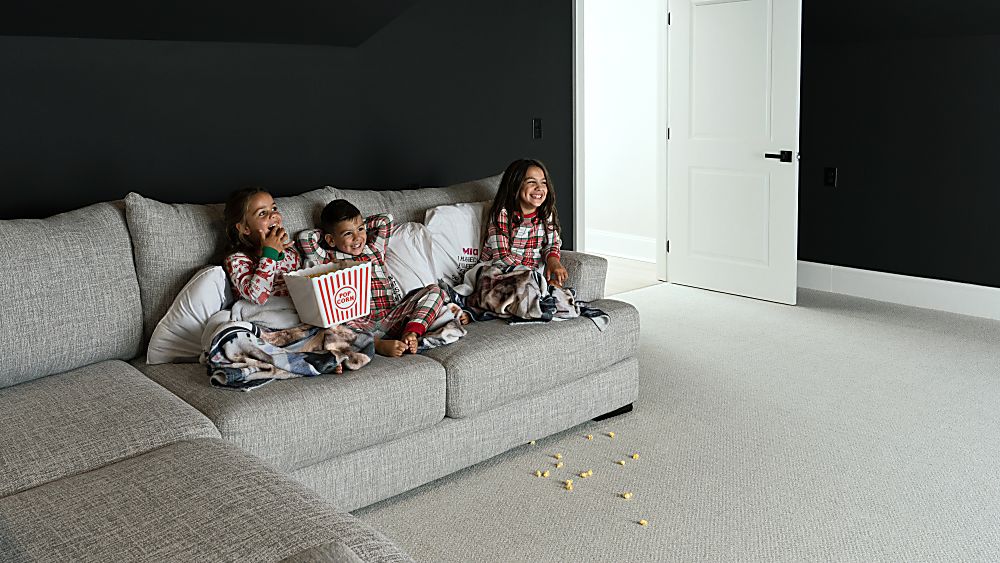
Residential flooring highlights tactile softness and cozy living. Most home carpets employ velvet plush, Saxony, or textured cut-pile designs created from soft nylon, polyester, or triexta yarn. These fibers stand upright with cut ends exposed, allowing individual filaments to bend freely underfoot. Familiarity with fundamental carpeting basics illustrates how higher pile height creates cozy insulation while naturally requiring regular maintenance to prevent high-traffic matting in busy hallways.
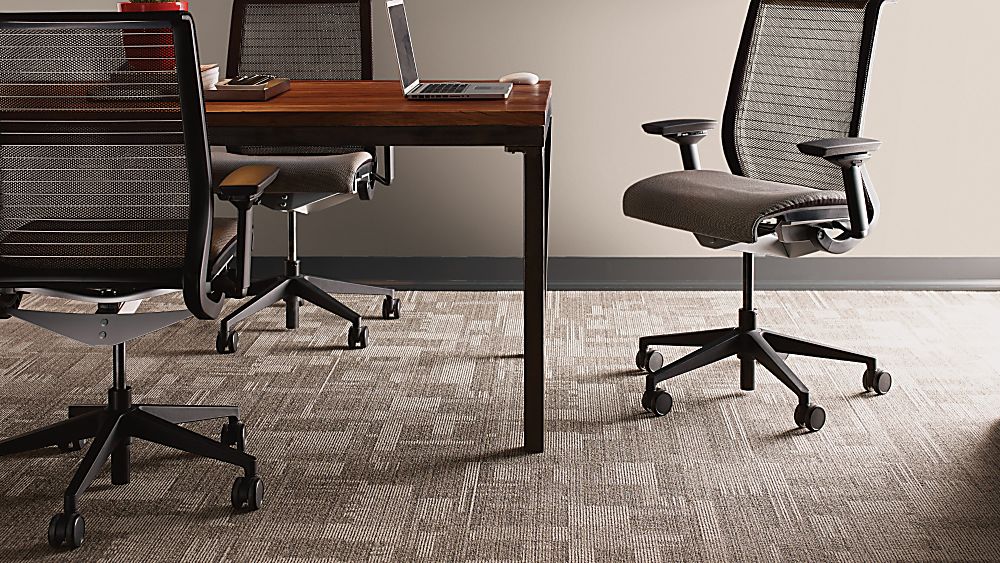
Commercial carpets prioritize structural integrity over deep sink-in cushioning. These rolls and tiles use low-profile loop piles, level loops, or tight multi-level loops where each strand of yarn loops continuously into the backing without being cut. Because the loops stay short and tight, fine grit, abrasive dirt, and tracked-in road salt stay perched near the top of the surface rather than burying deep into the pile. For facility managers and local business owners, durable commercial flooring ensures that heavy wheeled carts, high heels, and heavy rolling desk chairs glide smoothly across the floor without snagging loops or crushing the carpet structure.
Padding and Installation Techniques
The longevity of any carpet installation depends significantly on the subfloor preparation and the cushion underneath.
Residential Cushioning Standards
Residential carpet installation pairs the face carpet with a separate cushion, usually a 7/16-inch or 1/2-inch rebounded polyurethane pad. This soft layer acts as a shock absorber for daily steps, protecting the backing against delamination while providing valuable thermal comfort against cool concrete slabs or Wisconsin winter drafts.
Commercial Installation Systems
Placing a thick, yielding pad underneath a commercial carpet would cause immediate structural failure under rolling office chairs and heavy equipment carts. Instead, commercial flooring relies on rigid, stable installation methods:
- Direct Glue-Down: Installers trowel specialized adhesive across the concrete or plywood subfloor and press the carpet backing directly into the glue, eliminating shifting, bunching, and carpet wrinkles.
- Double Glue-Down: A high-density, flat commercial cushion is glued securely to the subfloor, and the carpet is subsequently glued to the top of that cushion, blending minimal shock absorption with total surface stability.
- Modular Carpet Tiles: Pre-backed modular squares attach using pressure-sensitive adhesives, creating durable floors where individual stained or worn squares can be lifted and swapped without disturbing the entire room.
Relying on certified installation services ensures subfloors receive proper moisture testing, surface leveling, and manufacturer-approved adhesives for a lasting finish.
Cleaning Routines and Everyday Durability
Care requirements correspond directly with the conditions each carpet is designed to encounter.
Residential carpet maintenance emphasizes routine vacuuming with a rotating brush roller to lift relaxed fibers, alongside prompt spot cleanup of household spills. Routine hot-water extraction every 12 to 18 months preserves manufacturer warranties and refreshes fiber resilience in living rooms and bedrooms.
Commercial carpets face mud, slush, coffee spills, and nonstop foot traffic every morning. Because commercial fibers are typically solution-dyed, color pigments run through the entire fiber shaft instead of just the exterior surface. This allows custodial teams to clean commercial carpets using industrial dry-cleaning compounds, heavy rotary extraction, and concentrated spot cleaners without risking color loss or fiber breakdown.
Choosing the Best Carpet for Your Space
Determining which style suits your property depends on how you plan to use the space:
- Opt for commercial-grade carpet in: Professional office suites, conference rooms, rental property corridors, retail shops, finished basements, home gyms, or craft workshops where rolling wheels and easy vacuuming are essential.
- Opt for residential carpet in: Master bedrooms, formal living rooms, nurseries, and quiet family dens where barefoot luxury, sound absorption, and decorative style are the primary goals.
Review our full carpeting catalog to compare plush household textures alongside commercial patterns and colors.
Find Your Ideal Flooring at Macco’s Floor Covering Center
Whether you need heavy-duty modular carpet tiles for a busy commercial workspace or a velvet-soft plush carpet for your home, our team of dedicated flooring experts is here to help you choose the ideal style. We provide honest guidance, free in-home measurements, and dependable installation backed by full manufacturer warranties.
We invite you to visit any of our convenient Wisconsin showrooms in Green Bay, Appleton, Sturgeon Bay, Marinette, Sheboygan, Schofield, or Janesville. Stop in today or reach out to our team to schedule your personalized design consultation!